English

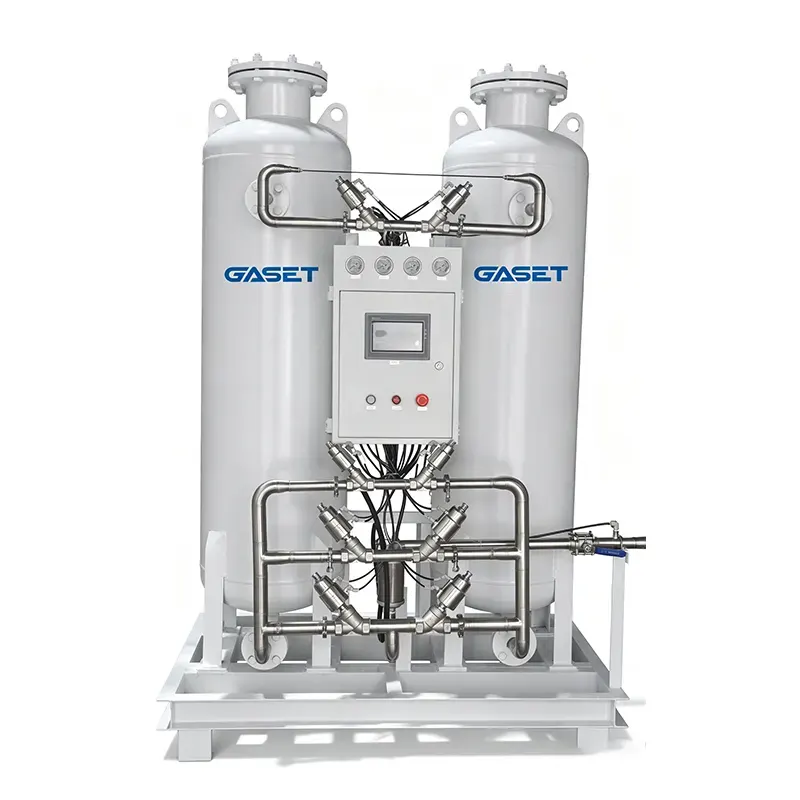
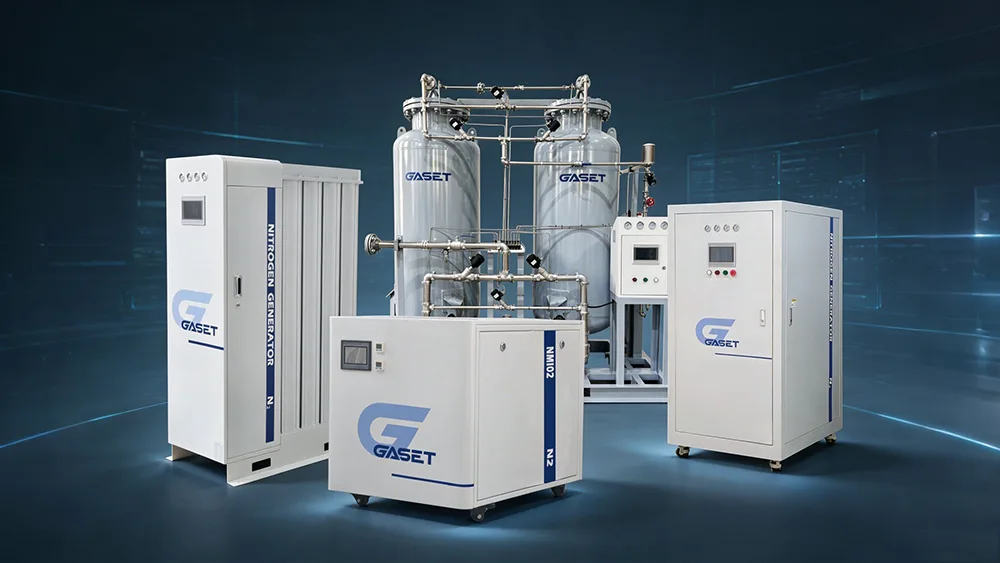
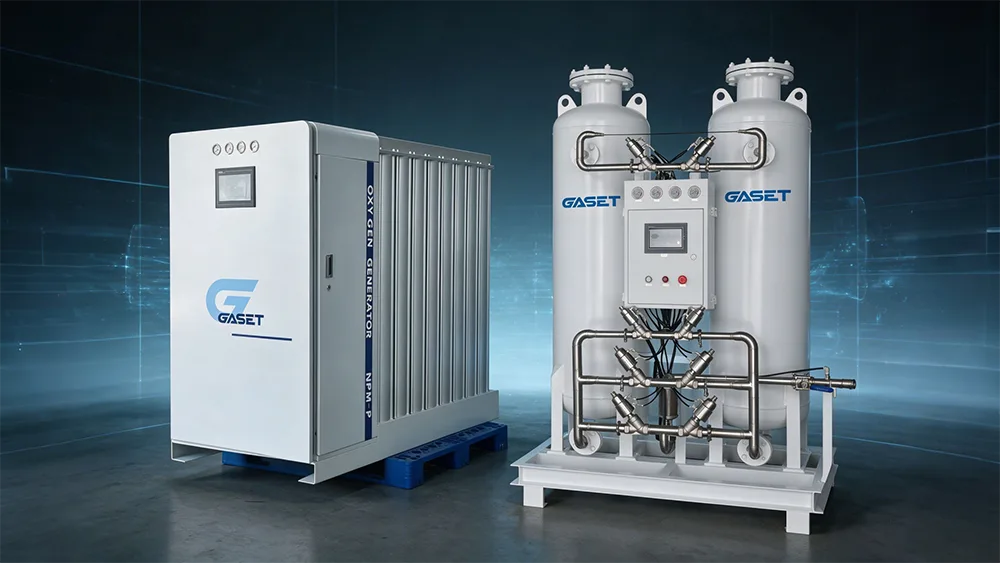
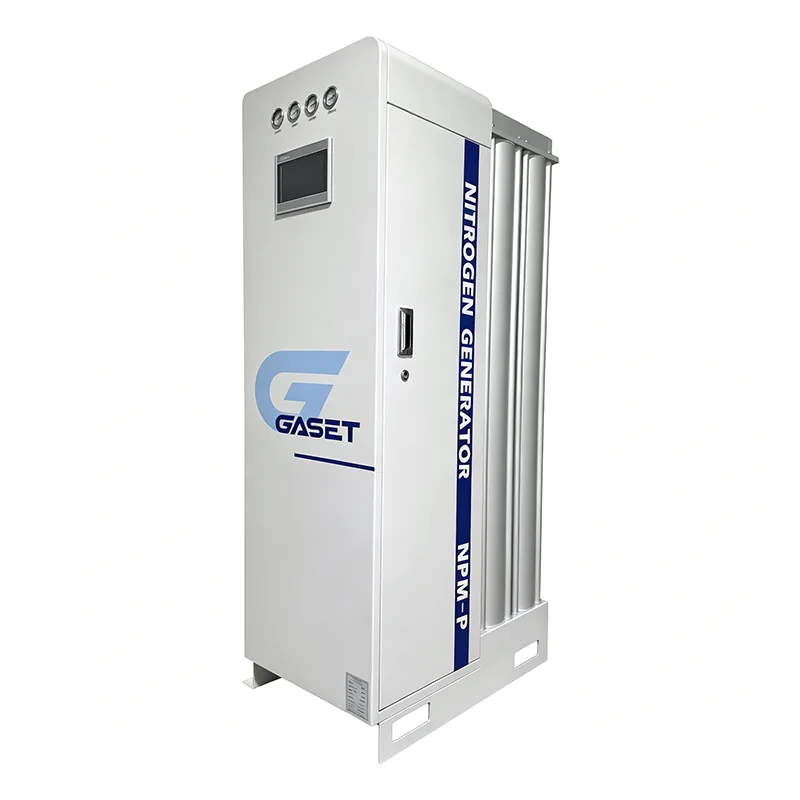
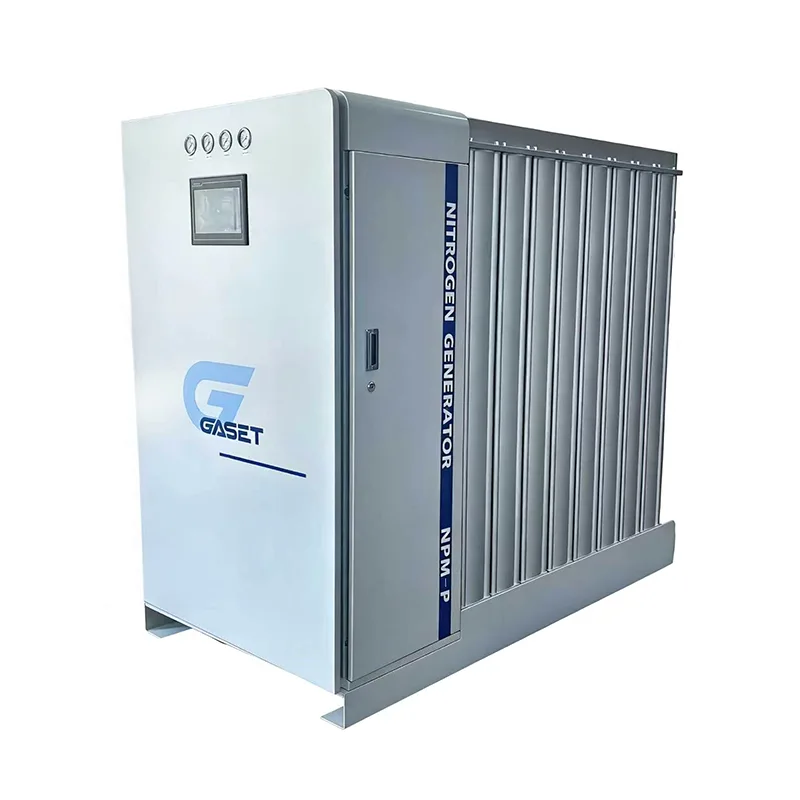
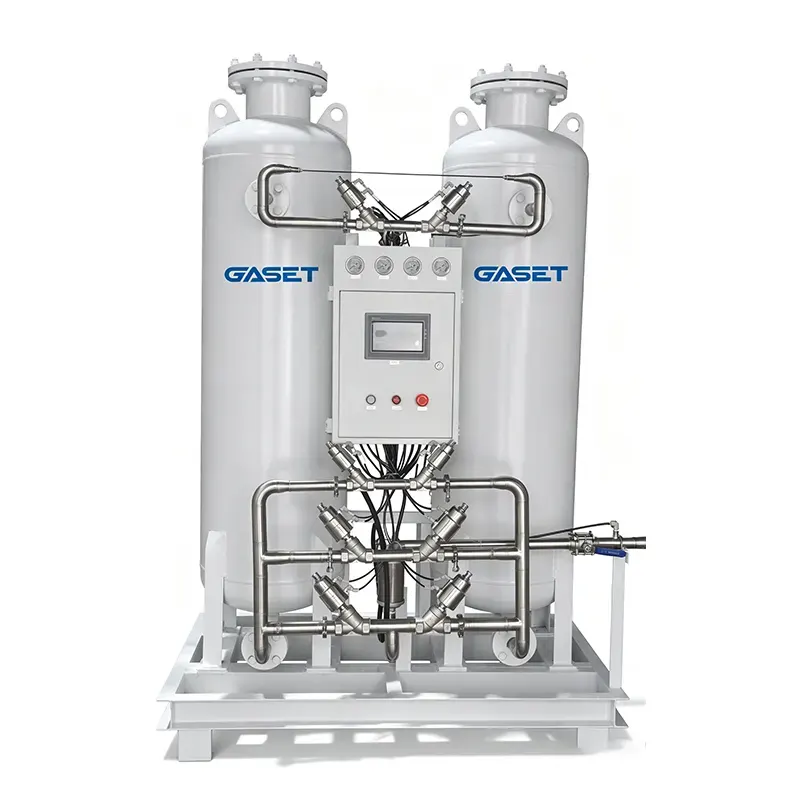
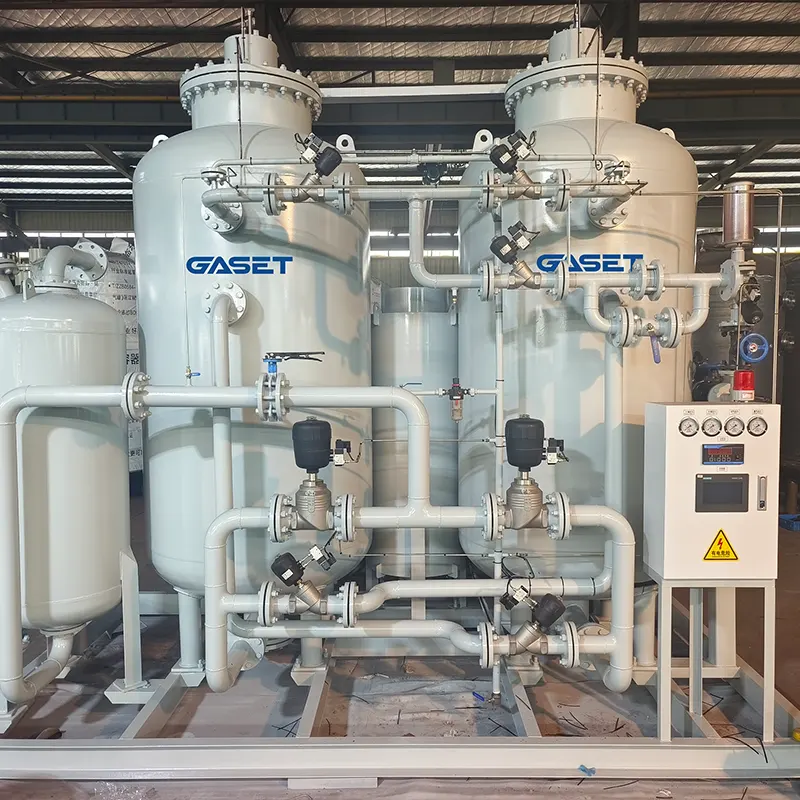
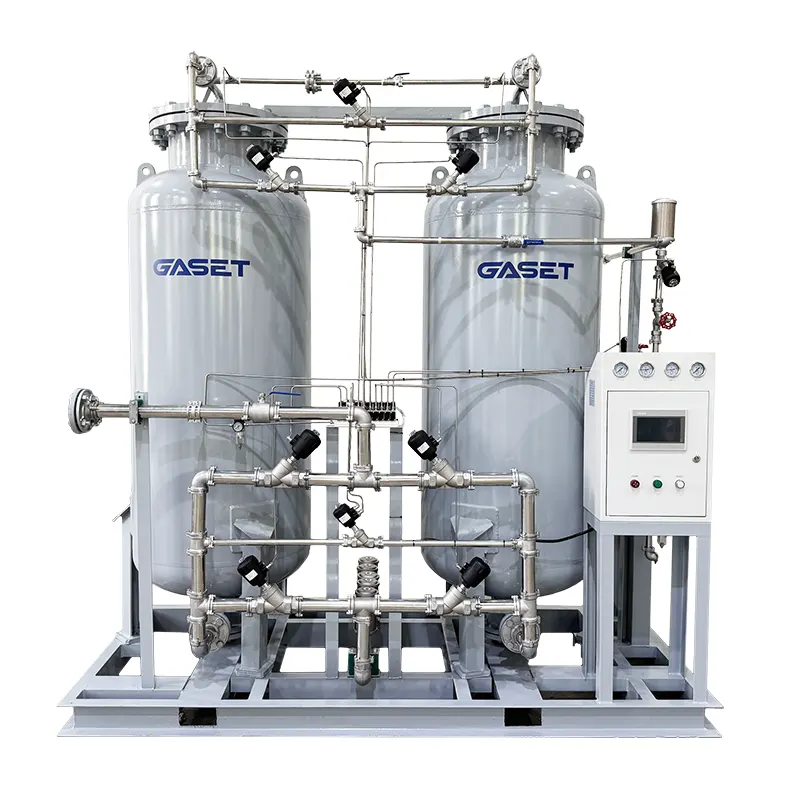
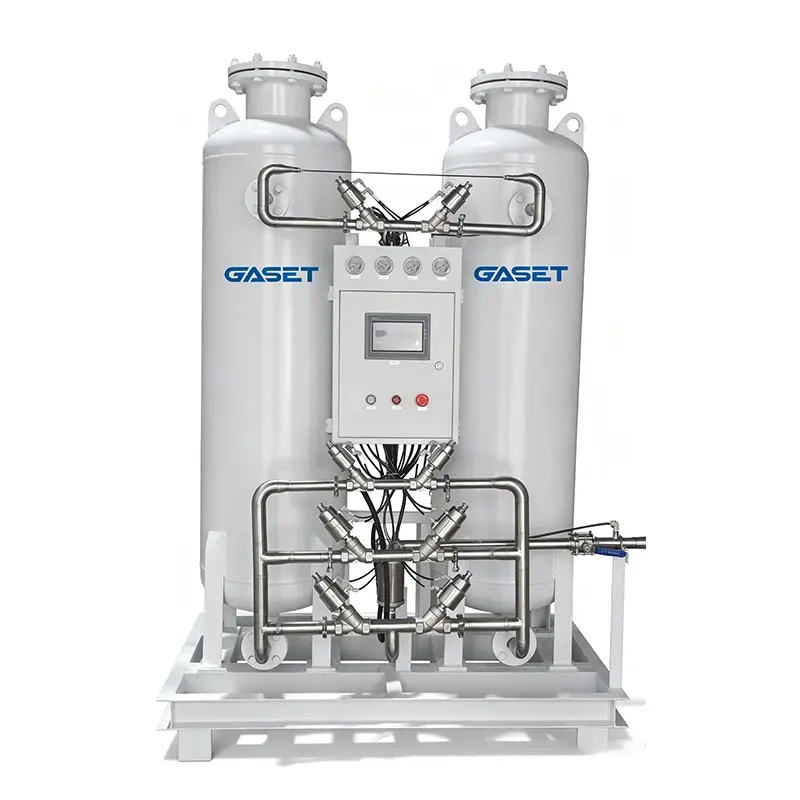
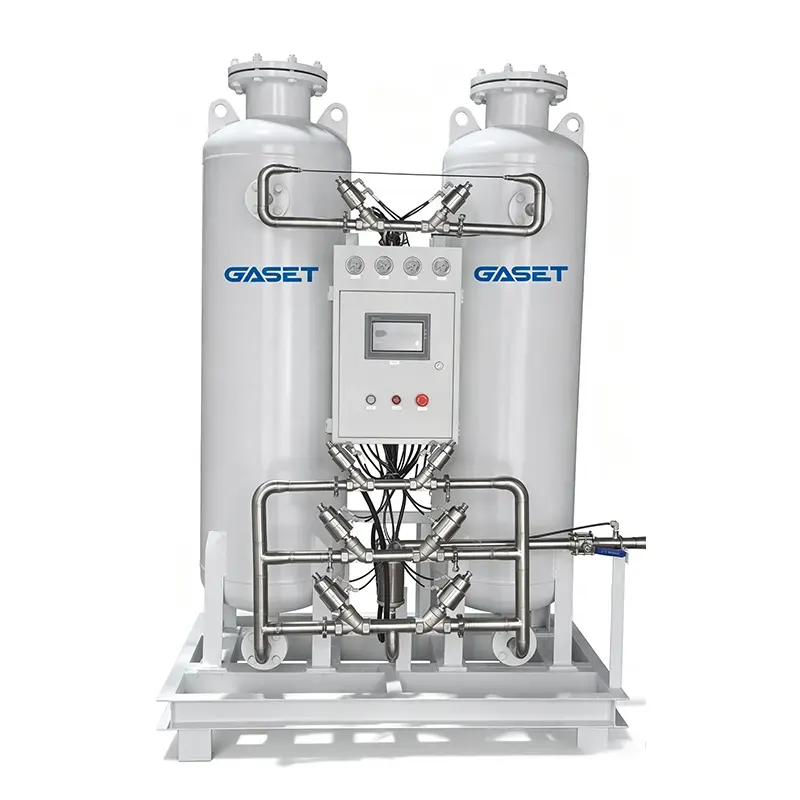
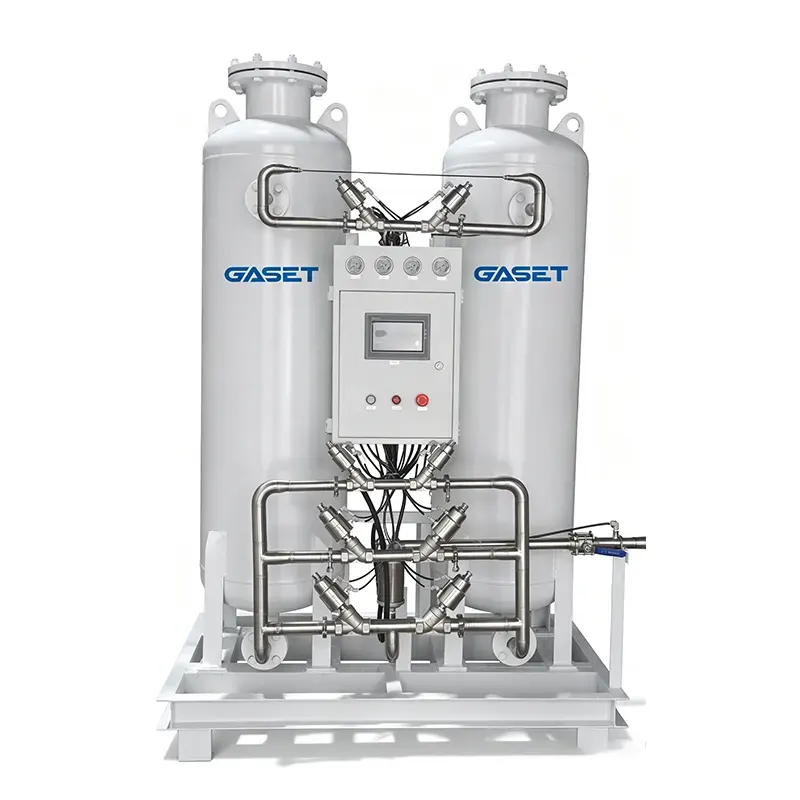
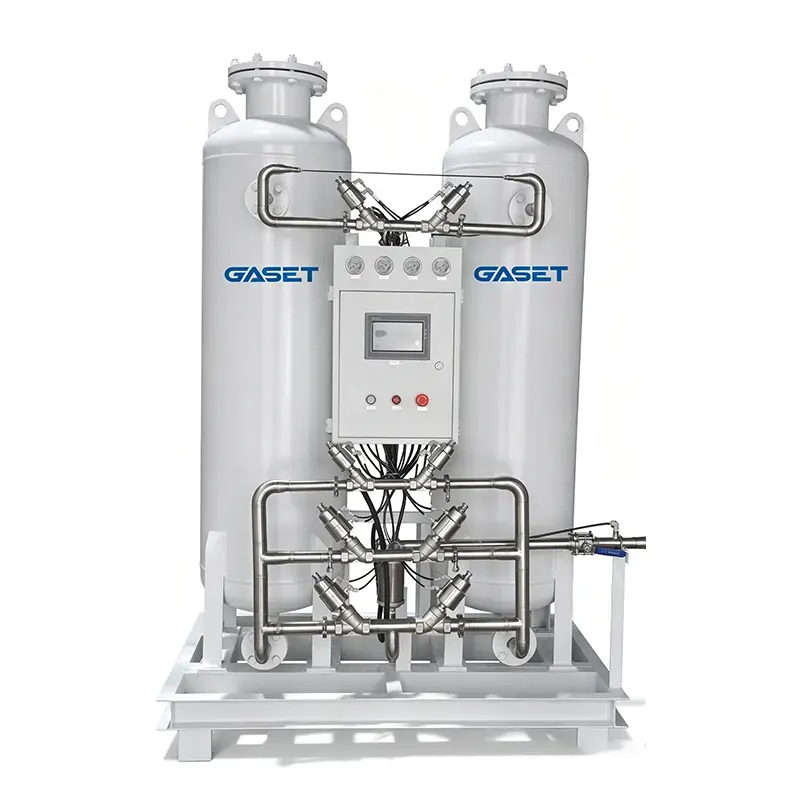
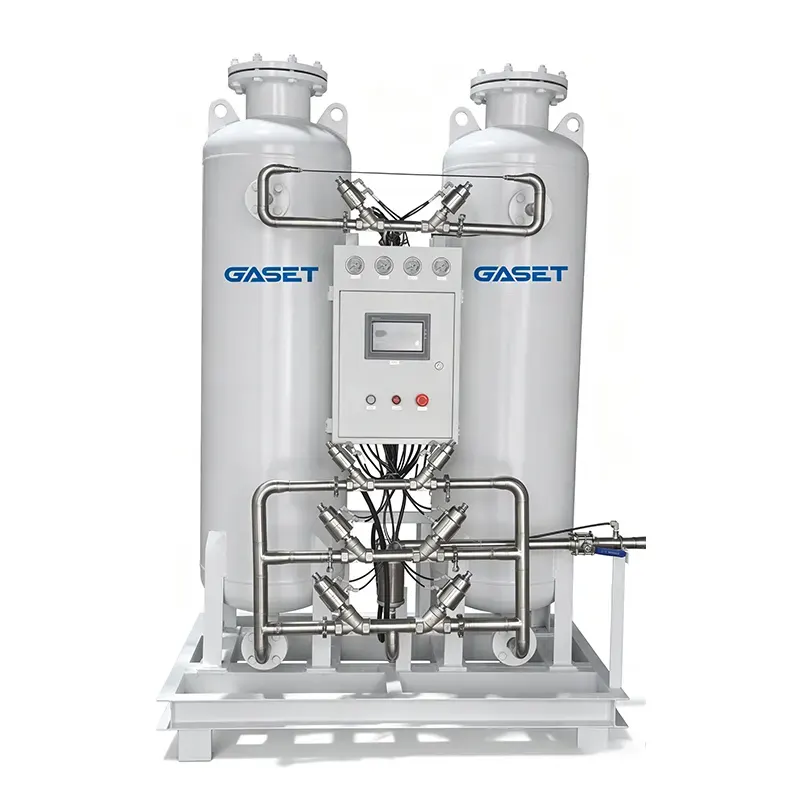
The China Twin-Tower Oxygen Generator for Glass Blowin by GSE Tech comprises four components: multi-stage dust and oil purification units, a pair of thickened carbon steel pressure-resistant adsorption cylinders, a constant-pressure buffer tank, and a timed electronic control system adapted to furnace load fluctuations. The two adsorption cylinders alternately perform oxygen enrichment and nitrogen desorption cycles, maintaining uninterrupted gas supply throughout operations and supporting continuous production with two or three shift schedules in glass manufacturing plants.
The Twin-Tower Oxygen Generator for Glass Blowing has passed all the full-load tests simulating the glass kiln furnace working conditions at the factory. It supports 72-hour uninterrupted continuous gas supply. The dual-tower automatically alternates to complete the oxygen-enriched adsorption, pressure relief, and nitrogen removal cycle. The entire gas supply is uninterrupted, without pressure fluctuations, and without purity attenuation, fully meeting the continuous production requirements of two or three shifts in the glass factory.
The thickened carbon steel adsorption cylinder has undergone independent water pressure resistance and high/low temperature alternating airtightness tests. It can withstand long-term high-temperature radiation, temperature fluctuations, and high-frequency pressure switching in the workshop, eliminating the risks of pipeline micro-leakage, pressure relief, and gas leakage. The structural pressure-bearing stability is strong.
Equipped with high-temperature industrial molecular sieves, it maintains excellent nitrogen adsorption and separation efficiency in high-temperature and high-dust workshop environments. After adsorption saturation, it automatically completely desorbs and regenerates. Long-term use is not prone to clogging, failure, or attenuation, and the oxygen output purity is stable and uniform.
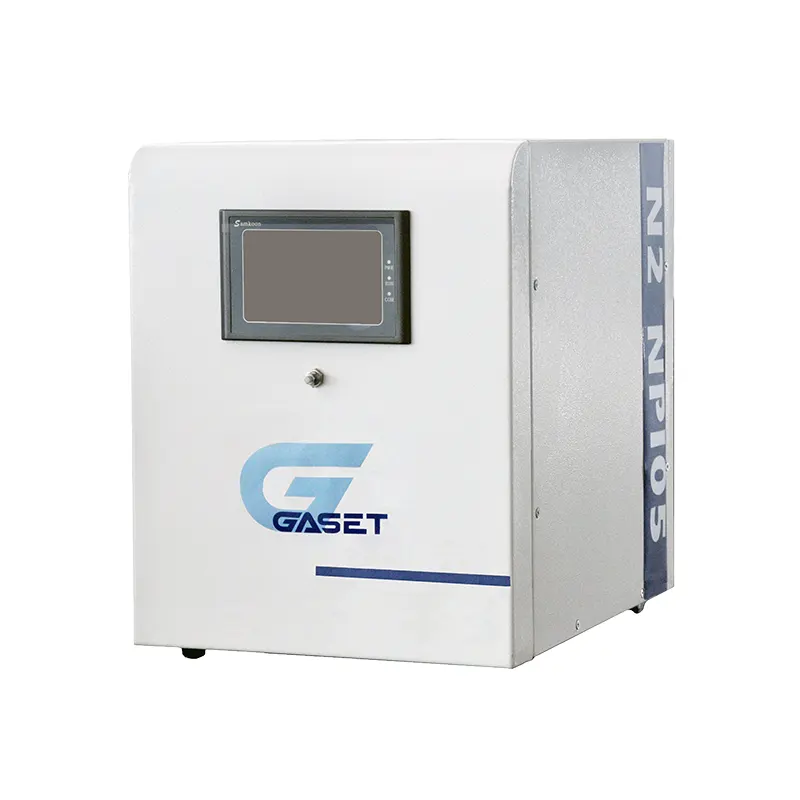
Based on the actual measurement of the glass furnace's fire power changes, start-stop, and production capacity fluctuations, the intelligent electronic control system can adapt to load changes in real time. Combined with the constant pressure buffer tank for pressure stabilization output, the airflow is stable without sudden changes, ensuring uniform glass melting and stable product appearance.
The frame adopts high-temperature resistant anti-corrosion electrostatic spraying technology. It has undergone dust accumulation, long-term heat radiation, dry-wet alternating durability verification. The shell is anti-aging, rust-proof, and does not peel off paint, and can be long-term adapted to the harsh production environment of the glass workshop.
Twin-Tower Oxygen Generator for Glass Blowing The interior is filled with high-temperature-resistant industrial molecular sieves, which exhibit superior adsorption affinity for nitrogen molecules. Under pressurized conditions, nitrogen from the air is retained and separated by the molecular sieve; the oxygen-enriched gas meeting standards is collected and directed to a buffer tank before being transported to the melting furnace. When the molecular sieve reaches saturation, the corresponding cylinder automatically depressurizes, allowing nitrogen to be discharged while restoring the sieve's pore adsorption capacity.
The dedicated dual-tower oxygen generator for glass bottle production features carbon steel adsorption cylinders that undergo individual hydrostatic and airtightness cycle pressure tests to eliminate gas leakage in pipelines under prolonged alternating high/low temperature conditions. Each unit undergoes a 72-hour full-load continuous gas supply test simulating glass kiln operation upon factory delivery, with simultaneous recording of oxygen purity, operational noise levels, and cylinder performance data regarding high-temperature resistance, corrosion resistance, and durability. The package includes mandatory acceptance documents such as cylinder material inspection reports, complete compliance documentation for special equipment registration, and comprehensive quality inspection records. The external frame employs thickened, high-temperature-resistant, anti-corrosion electrostatic spray coating designed to withstand long-term exposure to workshop dust and kiln thermal fluctuations.
Q1: Can the equipment supply gas continuously for 24 hours?
A: Yes. The dual-tower system operates in an alternating cycle for oxygen production. One tower adsorbs oxygen while the other releases pressure for regeneration. There is no gap in gas supply, allowing for continuous gas supply around the clock, perfectly suited for the continuous production of the glass factory.
Q2: Will the high-temperature kiln environment affect the oxygen production accuracy and the lifespan of the equipment?
A: No. The dedicated high-temperature molecular sieve and the overall optimization for high-temperature working conditions ensure that the equipment is not affected by the high-temperature radiation and temperature variations in the workshop. The oxygen purity is stable, and the equipment is less prone to aging and performance degradation.
Q3: Will there be gas leakage or unstable pressure during long-term operation?
A: No. All tanks and pipelines undergo cyclic pressure air-tightness testing. The factory has full-load tests with zero leakage and zero pressure drop. The pressure-stabilizing system outputs a constant pressure, making the working conditions more stable.
Q4: Is the operation complex and does it require dedicated personnel to monitor?
A: The equipment operates automatically with intelligent electronic control. It automatically adapts to fluctuations in the furnace load, automatically completes the cycle switching, and does not require frequent adjustments. It can start and run automatically, and the operation and maintenance are simple.
Q5: Is the high-dust workshop prone to clogging of filter elements and equipment failure?
A: The equipment is equipped with multiple-level dust and oil purification units. They can effectively filter air impurities, protecting the molecular sieve and pipelines, significantly reducing the probability of clogging and failure, and adapting to the harsh working conditions of the glass factory.
Q6: Are the equipment fully qualified and can they be directly inspected and put into production?
A: Each Twin-Tower Oxygen Generator for Glass Blowing comes with a tank material report, special equipment compliance documents, and a complete set of quality inspection records. The procedures are complete, and the equipment can be directly inspected and put into production in compliance.
|
Model |
Oxygen Output (Nm³/h) |
Air Inlet |
Oxygen Output |
|
|
90% |
93% |
|||
|
OP17 |
17.0 |
13.9 |
DN32 |
DN15 |
|
OP25 |
25.4 |
20.8 |
DN40 |
DN20 |
|
OP34 |
33.8 |
27.7 |
DN40 |
DN20 |
|
OP42 |
42.3 |
34.6 |
DN40 |
DN25 |
|
OP50 |
50.7 |
41.5 |
DN50 |
DN25 |
|
OP63 |
63.4 |
51.9 |
DN65 |
DN32 |
|
OP76 |
76.2 |
62.3 |
DN65 |
DN32 |
|
OP84 |
84.6 |
69.2 |
DN65 |
DN32 |
|
OP105 |
105.8 |
86.5 |
DN80 |
DN40 |
|
OP128 |
128.9 |
105.5 |
DN80 |
DN40 |
|
OP151 |
151.6 |
124.0 |
DN80 |
DN40 |
|
OP173 |
173.0 |
141.2 |
DN80 |
DN50 |
|
OP220 |
220.0 |
180.0 |
DN100 |
DN50 |
|
Model |
Equipment Size (mm) |
Weight (kg) |
Oxygen Buffer Tank |
||||
|
L |
W |
H |
Oxygen Tank Vol. (m³) |
Size (mm) |
Weight (kg) |
||
|
OP17 |
1820 |
830 |
2000 |
1140 |
0.3m³ |
φ550×1550 |
110 |
|
OP25 |
2000 |
900 |
2350 |
1430 |
0.6m³ |
φ650×1950 |
164 |
|
OP34 |
2000 |
920 |
2520 |
1620 |
0.6m³ |
φ650×1950 |
164 |
|
OP42 |
2040 |
990 |
2480 |
1930 |
1.0m³ |
φ800×2130 |
225 |
|
OP50 |
2250 |
1050 |
2520 |
2460 |
1.0m³ |
φ800×2130 |
225 |
|
OP63 |
2500 |
1150 |
2710 |
3010 |
1.5m³ |
φ950×2250 |
262 |
|
OP76 |
2600 |
1150 |
3000 |
3390 |
1.5m³ |
φ950×2250 |
262 |
|
OP84 |
2600 |
1250 |
2870 |
3810 |
1.5m³ |
φ950×2250 |
262 |
|
OP105 |
2800 |
1600 |
3350 |
4960 |
2m³ |
φ1000×2780 |
335 |
|
OP128 |
2820 |
1830 |
3800 |
5600 |
2m³ |
φ1000×2780 |
335 |
|
OP151 |
3200 |
1950 |
3600 |
6410 |
3m³ |
φ1200×2900 |
500 |
|
OP173 |
3200 |
1950 |
3550 |
6750 |
3m³ |
φ1200×2900 |
500 |
|
OP220 |
3320 |
2000 |
3755 |
8580 |
4m³ |
φ1400×2900 |
580 |
Address
Building 13-1, No. 58 Sunshine Avenue, Changshu City, Jiangsu Province, China
Tel
If you have any enquiry about quotation or cooperation, please feel free to email us at di.huang@gsetech.cn or use the following inquiry form.Our sales representative will contact you within 24 hours. Thank you for your interest in our products.